Positioning An East Shore Lakefront Home For Today’s Buyers
A beautiful East Shore lakefront home can attract attention on its own, but today’s buyers are looking well beyond the view. They want to understand the shoreline, the access, the permits, and how the property actually lives day to day. If you are preparing to sell, the right positioning can help buyers see both the lifestyle and the value with more confidence. Let’s dive in.
On Lake Tahoe’s East Shore, you are not just selling a residence. You are also presenting shoreline access, outdoor living, recreation use, and a property’s regulatory story.
That matters because buyers often evaluate a lakefront home as a complete experience. They want to know whether the pier or buoy is permitted, how boat access works, how much shoreline is truly usable, and whether future improvements may require more approvals.
TRPA notes that many Tahoe projects require both a TRPA environmental review permit and a separate county or city building permit. Nevada’s Division of State Lands also permits littoral structures on state-owned sovereign land, including piers, buoys, breakwaters, boat houses, and hoists, and states that its permit does not replace other required approvals.
For sellers, that means clear documentation and factual presentation can make a major difference. The more uncertainty you remove, the easier it is for a buyer to understand what makes your property special.
Most buyers begin their home search online, and that shapes how your home needs to be positioned from the start. According to NAR’s 2024 buyer survey highlights, 43 percent of buyers started their search on the internet, 51 percent found the home they purchased through online search, and 41 percent found photos very useful.
That data is especially relevant for East Shore lakefront homes, where many likely buyers are second-home shoppers with limited time in town. Before they ever step onto the property, they are studying the listing to decide whether it is worth a trip, a call, or a private showing.
In practice, buyers are scanning for two things at once. First, they want the emotional draw of the setting. Second, they want enough detail to feel secure about what they are seeing.
A private pier, buoy, or mooring can be a standout feature, but only if buyers understand what they are getting. On Tahoe, these are not casual add-ons. They are regulated assets that should be presented with clarity.
TRPA’s Shoreline Plan caps and regulates new shorezone structures such as piers, moorings, and public boat ramps. TRPA also enforces a 600-foot no-wake zone around the shoreline to reduce noise and help limit shoreline erosion.
That practical context matters in marketing. Instead of assuming buyers know what a buoy or dock means on Lake Tahoe, explain access in direct, factual terms.
You can help answer questions such as:
This type of information builds trust early. It also helps serious buyers move into due diligence with fewer surprises.
For East Shore lakefront homes, outdoor living is not secondary. It is part of the core value.
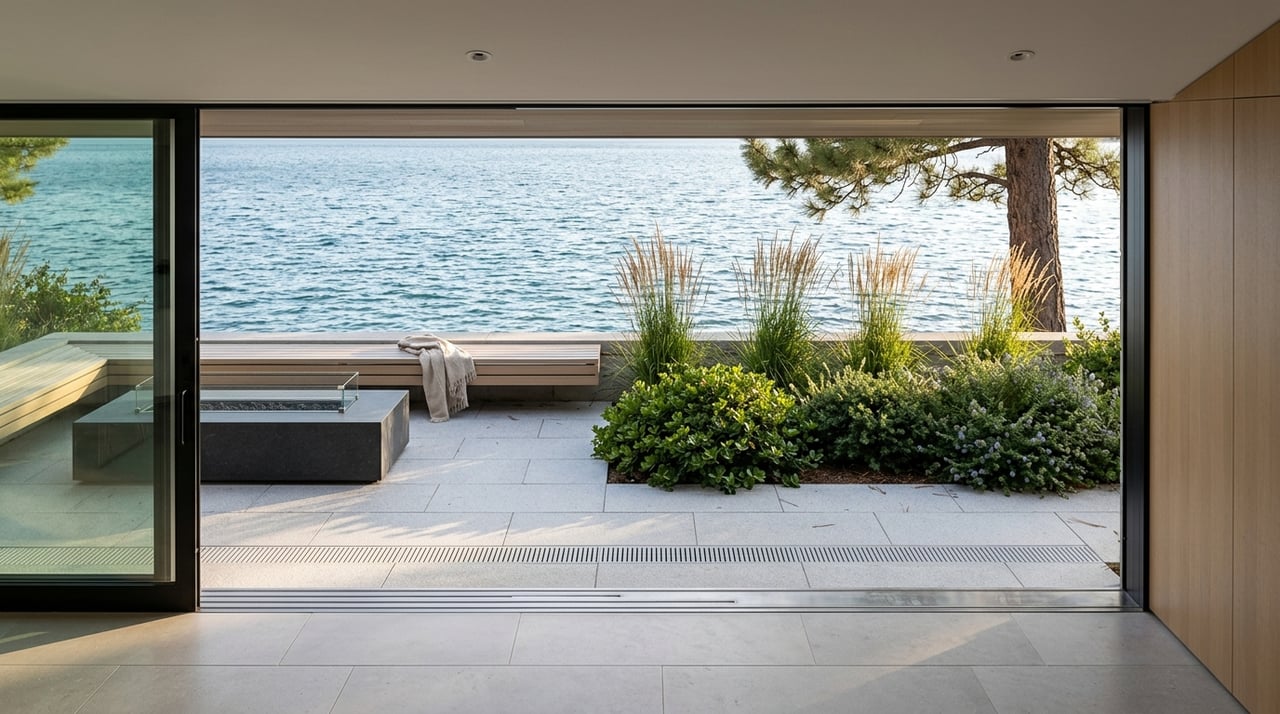
Buyers want to picture how they will use the property, not just admire it. They are thinking about waterfront lounging, lake access, sunny decks, beach time, and the transition from the home to the shoreline.
The Nevada Division of Environmental Protection describes the nearshore as the part of the lake people see and experience most. It also notes that nearshore quality is affected by clarity, algal growth, aquatic invasive species, and habitat decline.
For sellers, that means presentation should go beyond square footage and room count. Clean shoreline maintenance, visible stewardship, and clear documentation of usable outdoor areas can reinforce a premium impression.
Lifestyle marketing works best when it feels concrete. Buyers should be able to imagine the full sequence of the property, from arrival through the view reveal and out to the shoreline.
That is especially important in a luxury East Shore setting, where the experience often unfolds in layers. The approach, the first lake view, the main living space, the deck, the beach frontage, and the connection to the water all shape how buyers perceive value.
NAR guidance on photo preparation notes that high-resolution photos and video tours are essential. NAR also reports that 81 percent of buyers rated listing photos as the most useful online feature, while 39 percent valued detailed property information and 31 percent appreciated floor plans.
For a lakefront listing, that means your media package should do more than document rooms. It should help buyers understand:
Luxury buyers notice details, and cameras amplify them. Clutter, awkward furniture placement, or outdoor spaces that feel underused can weaken a strong property story.
NAR notes that staging can help buyers picture how a home supports their lifestyle. That point carries extra weight with a lakefront home, where buyers are evaluating both architecture and experience.
Strong staging should support the home’s best use patterns. That may include defining seating areas, creating a clean visual line to the water, and making decks, patios, or beach areas feel purposeful and ready to enjoy.
The goal is simple. Help buyers picture themselves living there with ease.
Timing can shape how persuasive a lakefront home feels. On the East Shore, late spring through summer often gives buyers the clearest view of what makes the property special.
Visit Lake Tahoe describes the region as a major summer destination and highlights beaches, boating, hiking, water sports, and sunbathing. It also notes about 300 days of sunshine.
NOAA’s 1991 to 2020 normals for South Lake Tahoe Airport show average highs of 72.0°F in June, 80.4°F in July, and 79.7°F in August, compared with 42.8°F in December. That makes summer a naturally strong season for showing beach access, outdoor entertaining areas, and sun exposure.
That said, the best launch date still depends on property readiness and local market conditions. A well-prepared listing with strong visuals and complete documentation usually performs better than a rushed launch in the perfect season.
Today’s buyers want answers sooner, especially at the luxury level. If key property details are hard to verify, hesitation can creep in quickly.
Because shoreline structures and site work may involve TRPA review, local building permits, Nevada sovereign-land permissions, and land-coverage rules near sensitive areas, sellers benefit from preparing records early. Buyers may ask about permit history, existing improvements, and whether future work could require additional approvals.
A smoother sale often starts with a more organized pre-listing process. Useful items may include available records related to shoreline features, site improvements, and any prior approvals tied to the property.
This is where hyper-local guidance matters. On East Shore lakefront properties, details that seem small can shape buyer confidence in a big way.
The best East Shore lakefront marketing balances aspiration with precision. It captures the beauty of the setting while giving buyers a factual, usable picture of what they are considering.
That usually means presenting the home through four key lenses:
When all four are working together, buyers can move from admiration to action more easily. And that is often what helps a special property stand out in a competitive luxury market.
If you are considering selling an East Shore lakefront home, thoughtful positioning can shape everything from first impressions to final negotiations. For concierge-level guidance grounded in local knowledge, experiential marketing, and a deep understanding of Tahoe shoreline value, connect with Craig Zager.



4th of July in Lake Tahoe

Activities, Events, Live Music
Get In Touch