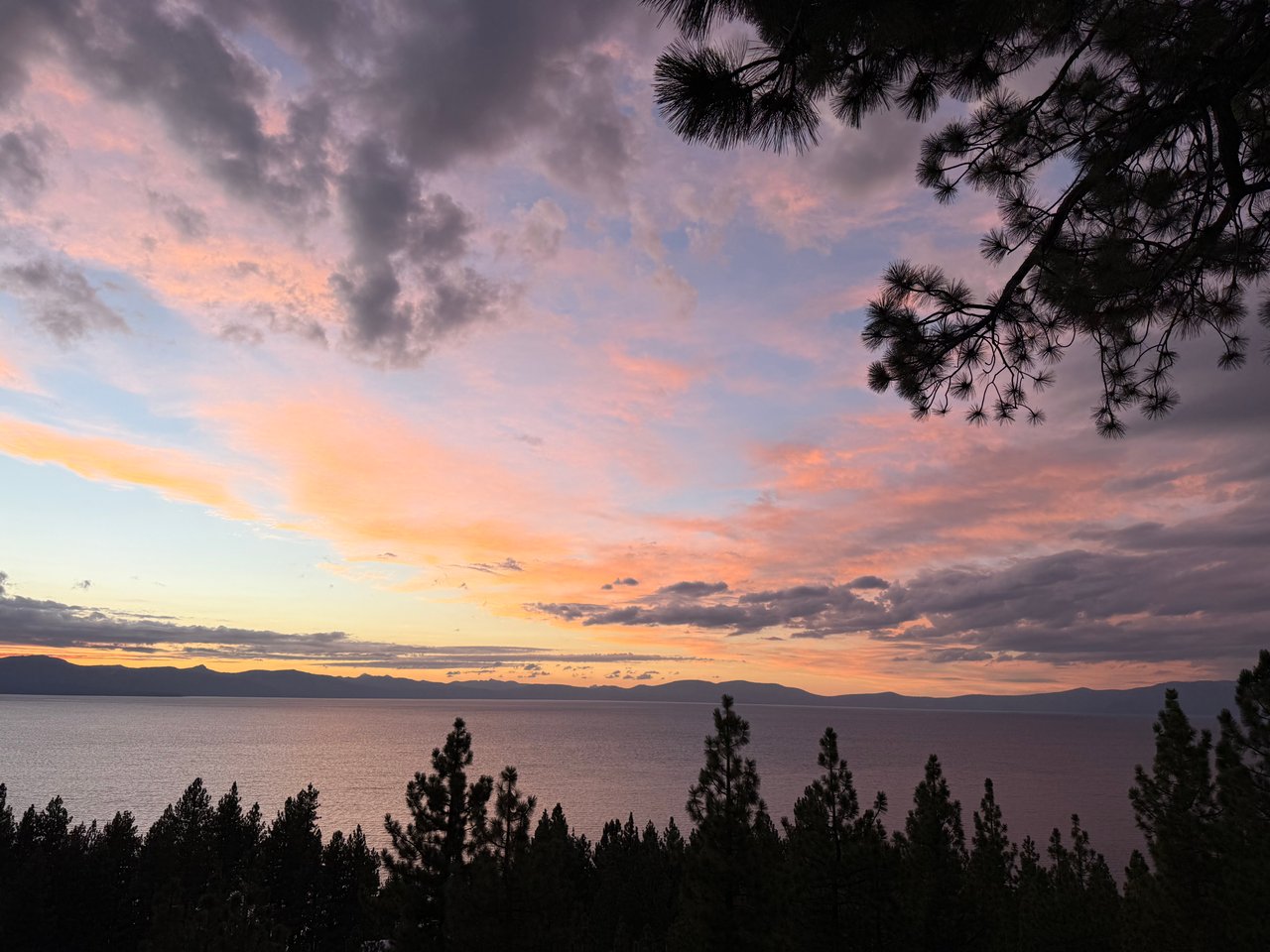
30 Years of the Lake Tahoe Summit: What Has Actually Changed?
I moved to Lake Tahoe five years before the first Lake Tahoe Summit was held, and over the years I’ve watched Tahoe evolve from a much quieter mountain community into one of the world’s most recognized recreation and vacation destinations. That growth has brought challenges, including increased traffic, development pressure and greater demands on the lake and surrounding environment. But it has also brought significant investment in trails, transportation, forest health, recreation and environmental restoration that has benefited those of us who live here as well as the millions of people who visit each year.
The first Lake Tahoe Summit was held in 1997 at a time when one of the biggest concerns was the rapid decline in Lake Tahoe’s famous water clarity. The Summit brought together federal, state and local leaders, the Washoe Tribe of Nevada and California, scientists, environmental organizations and business interests and helped establish a coordinated effort to protect and restore the Tahoe Basin. That effort became the Lake Tahoe Environmental Improvement Program, commonly known as the EIP.
With the Summit marking its 30th year next week, we’re taking a closer look at what has actually been accomplished over the past three decades, where progress has fallen short and what comes next for Lake Tahoe.
Lake Tahoe’s clarity declined significantly for decades, continuing through the 1990s. Since then, that downward trend has leveled off, which is an important accomplishment. But Tahoe has not returned to its historic clarity.
UC Davis has measured the lake’s clarity since 1968 using a white Secchi disk lowered into the water. In 2025, average annual clarity was 69.2 feet, compared with 62.3 feet in 2024. The historic benchmark of 97.4 feet represents average clarity measured from 1967 through 1971.
While the 2025 result was about seven feet clearer than the previous year, UC Davis researchers caution against placing too much significance on a single year. Their long-term analysis shows that clarity has essentially plateaued rather than significantly improved in recent years, with summer clarity continuing to be a particular concern.
Tahoe has largely stopped the dramatic loss of clarity that occurred during much of the last century, but returning the lake to historic levels has proven much more difficult.
Researchers are now studying why further improvement has been so challenging, including the effects of tiny particles, algae and changing conditions within the lake itself.
Forest health and wildfire prevention have also become much larger parts of the effort to protect Tahoe.
Over the past three decades, organizations participating in the Environmental Improvement Program have treated approximately 102,000 acres of forest through thinning, fuels reduction and other forest health projects.
For anyone who has lived here for a long time, wildfire has become an increasingly important part of life in Tahoe. The Angora Fire in 2007 and the Caldor Fire in 2021 made the risk very clear.
Today, forest thinning, prescribed fire, defensible space and fuels reduction are much more visible throughout the Basin than they were when the Summit began. The wildfire threat certainly hasn’t gone away, but the scale of the work being done to reduce that risk is considerably greater than it was 30 years ago.
Transportation may not be the first thing that comes to mind when we think about environmental restoration, but it has become an important part of the Tahoe effort.
Cars contribute to congestion, air pollution and runoff, while limited parking and roadside access can damage sensitive areas. Over the past three decades, more than 210 miles of bike and pedestrian trails have been added or improved around the Basin.
The Tahoe East Shore Trail between Incline Village and Sand Harbor has changed how people access that stretch of shoreline, providing a much safer alternative to walking or biking along Highway 28 and making the beaches easier to reach.
At the same time, transportation is one area where there is clearly significant work to be done.
One proposal I was particularly concerned about was the plan to reduce portions of Highway 50 along the East Shore from four lanes to two. While the intent was to improve safety and reduce the impacts of vehicle traffic, eliminating those additional lanes could have created much bigger safety and environmental problems. Highway 50 is a primary route out of the Basin, and we already see how quickly traffic backs up during busy summer weekends, storms and road construction. In the winter, the additional lane provides room to get around slower or stuck vehicles, and during a wildfire or other emergency, maintaining as much roadway capacity as possible is critical for both evacuation and emergency response. A long line of idling vehicles trapped in congestion would hardly be an environmental improvement either.
Summer traffic, limited parking and congestion remain major issues throughout Tahoe. Current planning continues to focus on expanding transit, improving bike and pedestrian connections, managing parking and reducing the number of individual vehicles traveling to the lake’s busiest recreation areas.
Anyone who has tried to get around Tahoe on a busy summer weekend knows that problem is far from solved.
Protecting Tahoe today also means addressing problems that received far less attention when the first Summit was held. Aquatic invasive species have become a major concern for the lake’s health and clarity, which is why boats entering Lake Tahoe are now inspected and, when necessary, decontaminated before launching.
That work has become even more important with the spread of golden mussels in other parts of the West. Preventing invasive mussels and other species from becoming established in Tahoe is now a critical part of protecting the lake and a good example of how the challenges continue to evolve.
More than 900 projects have been completed around the Basin since the Environmental Improvement Program began, and many have clearly benefited the lake and our community. But I also think it is important to acknowledge that not every decision made in the name of environmental improvement has been welcomed by the people who live here.
Over the years, residents have questioned whether some planning decisions strike the right balance between protecting Tahoe and accommodating continued development and tourism. Tahoe’s system of transferable land coverage and development rights is one example. The system is intended to concentrate development in more appropriate locations and protect environmentally sensitive land, but it also allows development rights and coverage to be bought and transferred rather than simply limiting additional development altogether.
The recently proposed expansion of commercial recreation at Zephyr Shoals is another example. The largely undeveloped property between Zephyr Cove and Skyland includes forest, shoreline and stream habitat that drains toward Lake Tahoe. Plans considered by the U.S. Forest Service and its concessionaire, Aramark, included additional parking and new visitor facilities. Those plans generated significant opposition from East Shore residents who questioned why one of the remaining undeveloped areas along this stretch of shoreline should be subjected to more intensive use in the first place. The Forest Service has since cancelled that particular proposal.
That tension is worth recognizing. Protecting Tahoe does not always mean building another trail, adding parking or finding a way to accommodate more visitors. Sometimes preservation may mean deciding that a sensitive area should simply remain undeveloped. As we look at what has been accomplished over the past 30 years, I think it is fair to also ask whether every project being proposed today truly supports the original goal of protecting Lake Tahoe.
Lake clarity remains well below historic levels. Wildfire continues to be one of the greatest risks facing the Basin. Traffic and recreation pressure remain difficult issues, particularly during the summer. Changing environmental conditions and invasive species are creating new challenges that were not necessarily part of the conversation when the first Summit was held.
What has changed is the scale of the response.
More than 80 public and private organizations now participate in the Environmental Improvement Program, and more than 900 projects have been completed since the effort began.
Having lived here since before the Summit existed, I’ve watched both Tahoe and the challenges facing it change considerably. Not every change has been positive, and there are plenty of issues we still need to address. But many of the improvements we see around the lake today are the result of work that began years or even decades ago.
Thirty years later, the job is clearly not finished. But there is also no question that a great deal has been accomplished.
This year’s Summit will be held Wednesday, August 19, from 10 a.m. to noon at Sand Harbor State Park. Professional climber Tommy Caldwell will be the keynote speaker. In-person registration is currently full, with a waitlist available, but the Summit will also be available virtually.
Sand Harbor will be closed to the general public until 1 p.m. on August 19 because of the Summit. The park will reopen afterward on a first-come, first-served basis, and regular day-use reservations will not be available that morning.

Get In Touch