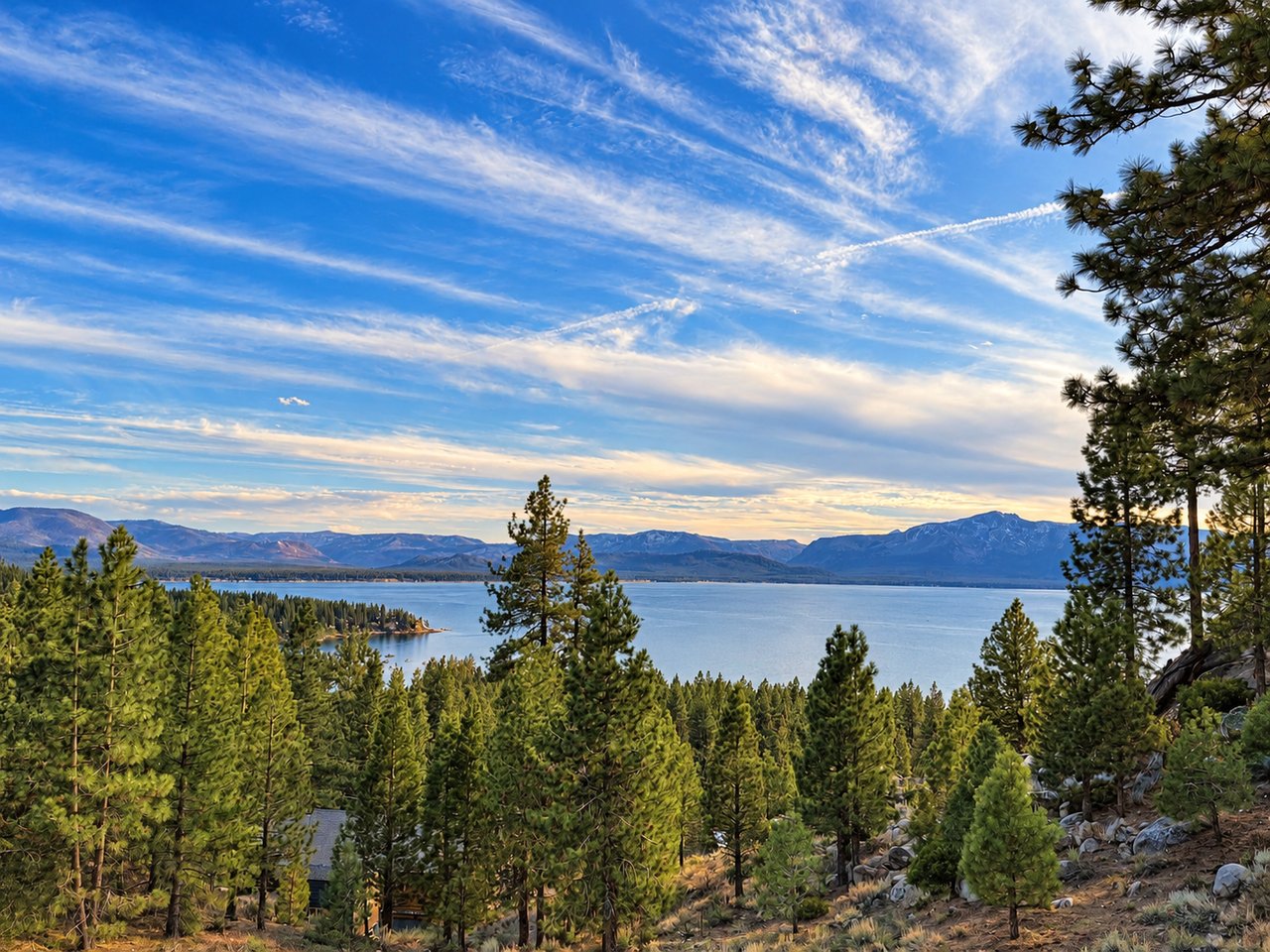
Nearly 35 New Sensors Are Now Monitoring Lake Tahoe
After living in Lake Tahoe for more than 35 years, I’ve watched the conversation around protecting the lake change considerably. We’ve learned a lot about clarity, runoff, wildfire, invasive species and the health of our forests, but much of that research has traditionally depended on scientists going into the field, collecting samples and analyzing the results later. A new monitoring system launched this week is taking a different approach.
On September 15, the University of Nevada, Reno announced that the Tahoe Environmental Observatory Network, or TEON, is now live. The system uses nearly 35 sensors positioned throughout the lake, forests and watershed to continuously collect information about conditions across the Tahoe Basin. The goal is to understand Lake Tahoe as one interconnected system rather than looking only at what is happening in the water.
Some of the sensors are located directly in Lake Tahoe, where researchers are tracking water temperature, dissolved oxygen, chlorophyll, conductivity and wave height. Chlorophyll measurements help scientists monitor algae production, while temperature and dissolved oxygen provide information about conditions below the surface.
Other monitoring equipment extends into the watershed and surrounding forests. Researchers are collecting information on weather, streams, runoff, wildlife and changes in different habitats around the Basin. Some sensors can record environmental conditions every few minutes, while cameras are being used to document wildlife activity.
That broader view is important because what happens miles from the shoreline can eventually affect the lake. Snowmelt moves through forests, meadows and streams before reaching Tahoe, wildfire can change vegetation and soil conditions, and heavy winters and drought years affect streamflow differently. Development and paved surfaces influence runoff as well, so looking at all of those pieces together gives researchers a much better picture of why conditions in the lake change.
Tahoe has been studied extensively for decades, but environmental conditions don’t always cooperate with research schedules. A major storm, unusually warm period, wildfire or rapid snowmelt event can create changes over a matter of hours or days, so permanent sensors allow researchers to continue gathering information through those events instead of relying only on periodic field measurements.
Recent research in Tahoe has already shown how useful this type of continuous monitoring can be. Sensors placed in streams and the lake have helped researchers study how dramatically different winters, including drought and high-snow years, affect streamflow and algae production near the shoreline. TEON expands that idea considerably by building a broader network designed to show what is happening in different parts of the Tahoe Basin at the same time.
One of the more interesting parts of the project is that the information isn’t being collected only for scientists and government agencies. TEON data is being made publicly accessible online, which means researchers around the world can use it, but so can those of us who live here.
According to the University, a boater or beachgoer could check current water-temperature information, while scientists, land managers and policymakers can use the larger data set to study long-term changes and make management decisions. For a place that receives as much environmental research and public investment as Lake Tahoe, making that information easier for the public to see is a practical step forward.
For years, many of Tahoe’s environmental issues were discussed separately. Forest management was one subject, lake clarity was another, and wildfire, invasive species, runoff and algae were often treated as individual problems even though they are closely connected.
Researchers working on TEON designed the network to look beyond the lake itself. Different areas around Tahoe have different elevations, vegetation, levels of development and watershed characteristics, so monitoring those differences allows scientists to compare what is happening upstream with what eventually happens along the shoreline and in the lake.
That can help answer some important questions more precisely. What happens to streams after a major wildfire? How does an unusually heavy snow year affect nutrients reaching the lake? What conditions contribute to increased algae along certain sections of shoreline? How are Tahoe’s forests and wildlife responding to changing conditions? Instead of waiting months or years for isolated measurements, scientists will increasingly have a continuous record to work from.
TEON won’t solve Tahoe’s environmental challenges by itself, but it will give researchers a clearer picture of how changes in the forests, streams and shoreline are affecting the lake over time. That is especially useful here where wildfire, snowpack, runoff, development and water quality are all closely connected.
For those of us who have lived here for a long time, the biggest change is how much more continuously Tahoe can now be monitored. Instead of relying mainly on periodic field measurements, researchers will have a much broader record of what is happening across the Basin as conditions change.





Get In Touch