The topic of a looming recession has been a point of considerable discussion, sparking concerns about its potential impact on employment and the real estate market.
Interestingly, the latest Economic Forecasting Survey by the Wall Street Journal marks a notable shift in expert opinion. Currently, less than half of the economists surveyed (48%) predict a recession within the next year, a significant decrease from previous forecasts.
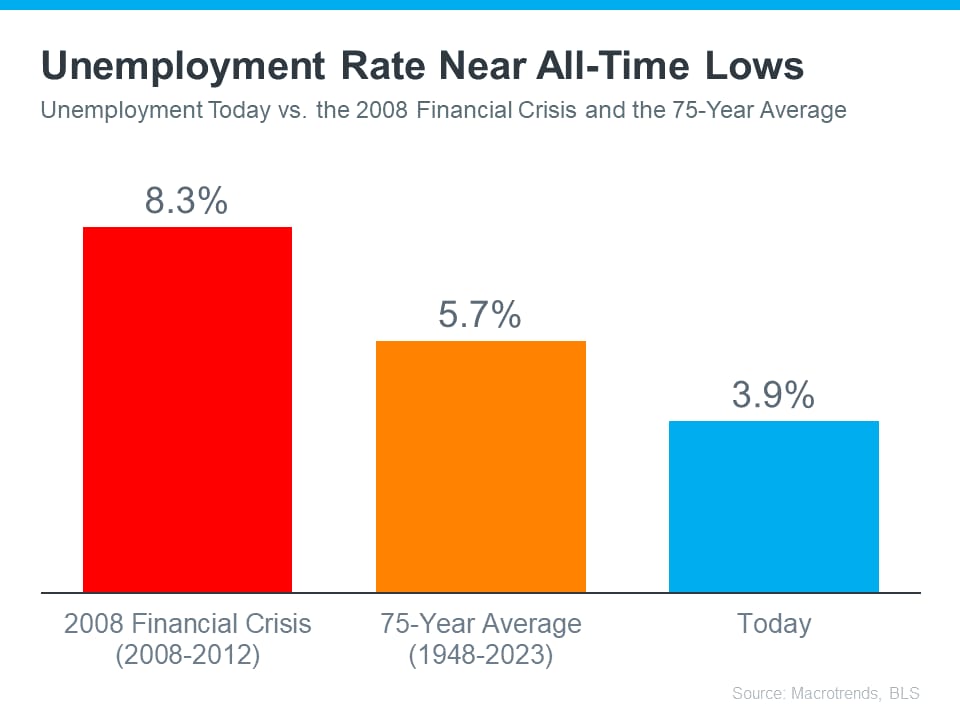
This change has us looking into what it all means for jobs and, naturally, for the housing market. Historical data from Macrotrends and the Bureau of Labor Statistics (BLS) offer valuable insights. The long-term average unemployment rate, dating back to 1948, hovers around 5.7%. In contrast, during the 2008 financial crisis, this figure escalated to 8.3%. However, today’s unemployment rate is substantially lower than these historical averages(3.9%).
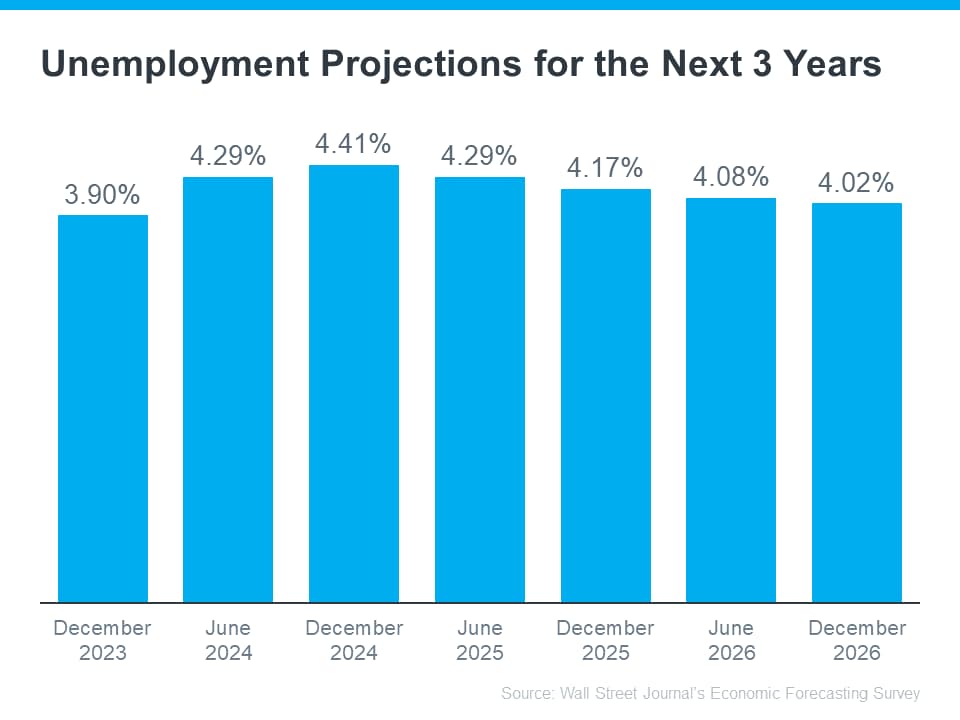
Future projections suggest that unemployment rates are likely to remain below the 75-year average. This trend is encouraging, indicating that a significant surge in foreclosures, potent enough to disrupt the housing market, is not likely in the forecast.
In Real Estate investing understanding the relationship between employment trends and the housing market is crucial. Let’s connect if you have any general real estate questions or questions about our current, local real estate market.