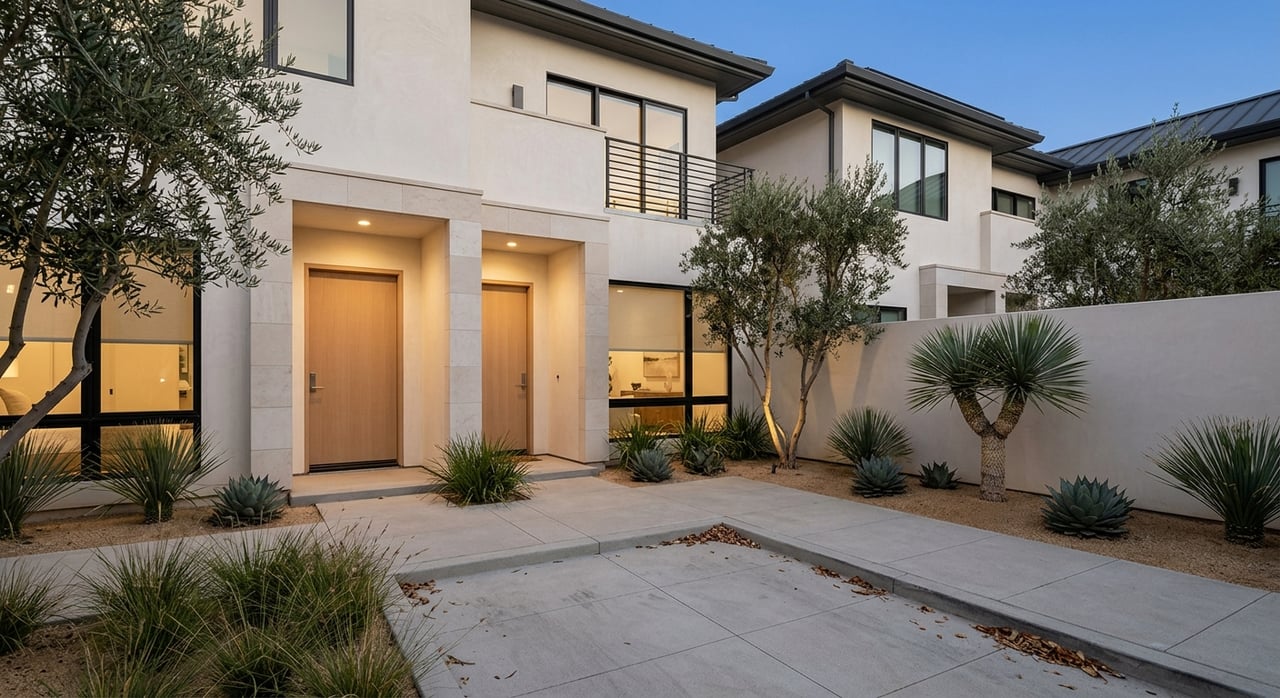
Lake Village Townhomes As A Hybrid Vacation Home And Investment
Trying to find a Lake Tahoe property that feels like a personal retreat and makes financial sense? That is exactly why many buyers look closely at Lake Village townhomes in Zephyr Cove. If you want a second home with flexible use, this community can offer real appeal, but only if you understand how HOA rules, Douglas County permits, and rental logistics fit together before you buy. Let’s dive in.
Lake Village stands out because it offers a strong blend of lifestyle value and relatively low-maintenance ownership. According to the Lake Village neighborhood guide, the community includes about 330 homes across roughly 52 acres, with a mix of condos and townhomes in layouts that commonly include two and three bedrooms.
That range matters if you are buying for both personal enjoyment and rental potential. Publicly described floor plans run from smaller one-bedroom configurations up to four-bedroom homes, with some units offering lofts, offices, or multi-level living. About 30 percent of homes have garages, which can be an important detail when you start evaluating guest parking and storage needs.
For many second-home buyers, the hybrid strategy starts with a simple question: Would I genuinely want to spend time here myself? In Lake Village, the answer is often yes because the community amenities support both summer and winter stays.
The community profile highlights a seasonal heated outdoor pool, year-round spa, tennis and pickleball courts, clubhouse facilities, picnic areas with propane BBQs, a playground, and a paved walking path. That amenity mix gives you more than just a place to sleep. It creates a built-in vacation experience that can work for your own use and for guest appeal.
Location is another part of the draw. The same neighborhood guide notes that Nevada Beach is a short walk away, while Heavenly’s Boulder Lodge is about seven miles up Kingsbury Grade. Proximity to Stateline, skiing, golf, and lake access helps support the kind of year-round demand many hybrid buyers want.
A beautiful townhome in a strong resort setting does not automatically make a strong investment. In Lake Village, rental potential depends on whether the property can legally and practically operate as a vacation home rental under both HOA and county rules.
Nevada law allows transient commercial use in a planned community only when the governing documents do not prohibit it, the executive board and any master association approve it, and local zoning and licensing requirements are satisfied, as outlined in Nevada Revised Statutes Chapter 116. That means you need more than a good-looking property. You need a property that fits the rule structure.
Douglas County adds another layer. The county states that vacation home rentals are only permitted in Tahoe Township, require a permit before advertising or renting, must be renewed annually, and are subject to a permit cap and neighborhood density limits under its vacation home rental permitting process.
This is one of the most important facts for buyers to understand. In Douglas County, a vacation home rental permit becomes void when title transfers, which means a buyer cannot rely on the seller’s permit carrying over after closing, according to the county’s vacation home rental materials.
That single rule changes how you should underwrite the purchase. If you are buying a Lake Village townhome as a hybrid asset, you should never assume short-term rental income is guaranteed just because the home has been rented before. The better approach is to treat any future permit approval as a separate, post-closing process.
In communities like Lake Village, HOA diligence is not optional. Douglas County’s application requires owners to acknowledge HOA and CC&R restrictions, certify that the property is not in an HOA regime that prohibits or limits vacation home rentals, and notify the HOA of the intent to rent. County approval does not override HOA rules, based on the same Douglas County VHR application materials.
There is also public evidence that Lake Village has an HOA-managed rental process. The Lake Village website includes member pages related to rentals by owner and a short-term rental 24-hour contact, although the detailed content was not publicly accessible during research. That suggests a managed structure, but you should still review current governing documents directly during due diligence.
A hybrid vacation home works best when you understand the day-to-day obligations ahead of time. Douglas County requires a fairly detailed application package that includes a parking diagram, a local contact person, proof of annual fire inspection, proof of short-term-rental-specific insurance, and acknowledgment of HOA restrictions.
Insurance thresholds are also specific. The county requires at least $500,000 in general liability coverage for Tier 1 and Tier 2 permits, while Tier 3 requires $1 million, as described in the county’s permit packet. If you are running numbers, those costs belong in your model from day one.
Guest rules are strict too. County rules limit nighttime occupancy to two people per bedroom, allow daytime occupancy up to double that nighttime limit, require parking placards, and set quiet hours from 9:00 p.m. to 8:00 a.m. Advertising must also include the permit number, maximum occupancy, vehicle limits, parking rules, and quiet-hour notice.
Not all Lake Village townhomes will perform the same way as hybrid assets. Bedroom count matters because county occupancy rules tie nighttime occupancy directly to the number of bedrooms. In practical terms, a two-bedroom unit will usually pencil differently than a three- or four-bedroom layout.
That does not automatically make the largest unit the best investment. Larger homes may support more occupancy, but they also create more pressure around parking, guest communication, and rule compliance. A well-located two-bedroom with a practical layout and manageable operations may outperform a larger unit if the ownership experience is smoother.
Some Lake Village homes include lofts, lower-level spaces, or flexible-use rooms. Douglas County states that a vacation home rental must be a permanent habitable dwelling unit, cannot be subdivided or occupied in portions, and all occupants must share common living, eating, and cooking spaces.
That means you should be careful about making assumptions regarding bonus rooms or lower levels. A space that feels useful in marketing copy may not change legal occupancy the way a buyer expects. This is one of those details that deserves early review, not last-minute discovery.
If you are considering Lake Village as both a vacation home and an investment, the cleanest approach is to model three separate use cases.
This framework reflects the reality of Douglas County’s new VHR application process, especially because permits are capped and non-transferable. It helps you avoid overpaying based on best-case assumptions.
Your analysis should include more than mortgage and HOA dues. Based on the county framework, key short-term-rental expense categories may include:
If the numbers only work when everything goes perfectly, the property may be better treated as a second home with optional rental upside instead of a pure investment play.
Lake Village can make a lot of sense for buyers who want to enjoy Tahoe personally while keeping rental potential on the table. The amenity package, walkable beach access, and year-round location advantages are real strengths. For the right buyer, that combination supports both lifestyle value and disciplined investment thinking.
At the same time, the best Lake Village purchases are usually the ones approached with clear eyes. This is not a plug-and-play short-term-rental market. It is a rules-based environment where HOA review, parking, permit eligibility, insurance, and occupancy limits all shape the real value of the asset.
If you want help evaluating whether a specific Lake Village townhome fits your second-home goals, rental strategy, or fallback plan, connect with Craig Zager. You will get local, property-level guidance grounded in East Shore experience and careful due diligence.




4th of July in Lake Tahoe

Activities, Events, Live Music
Get In Touch