Life In Lakeridge: Quiet Lakefront Living Without STRs
Looking for Lake Tahoe living that feels calm, established, and close to the water without the constant churn of vacation rentals? Lakeridge stands out for exactly that reason. If you want a second home, future downsizing option, or lake-area retreat where quiet continuity matters, this neighborhood offers a distinct lifestyle on the East Shore. Let’s dive in.
Lakeridge is a small census-designated community in Douglas County with just 409 residents according to 2020 Census data. That small scale shapes the experience in a real way. Instead of feeling like a busy resort zone, it reads as settled, local, and residential.
The neighborhood also operates within the county’s special-district framework through the Lakeridge General Improvement District. That matters because it points to a community built around long-term maintenance and continuity rather than rapid expansion. County water-system materials note that little growth is anticipated, which reinforces the sense of stability many buyers are looking for.
One of Lakeridge’s strongest draws is its quieter character. Douglas County records support the neighborhood’s no-short-term-rental identity, which is a major distinction on the lake. The county defines vacation home rentals as stays of 28 days or less, and as of May 11, 2026, the county’s VHR waitlist lists Lakeridge HOA as a full neighborhood with no permits available.
County hearing materials in a Lakeridge enforcement matter also state that the subdivision has a deed restriction requiring rentals to be more than 60 days. Together, those records support what many buyers are really seeking here: a neighborhood shaped more by homeowners and longer-term occupancy than by weekend turnover.
In practical terms, this often creates a more consistent residential rhythm. You are less likely to see the patterns that come with frequent guest changeovers, such as a revolving-door feel from week to week. For buyers who value privacy, predictability, and neighbor continuity, that can be a meaningful lifestyle advantage.
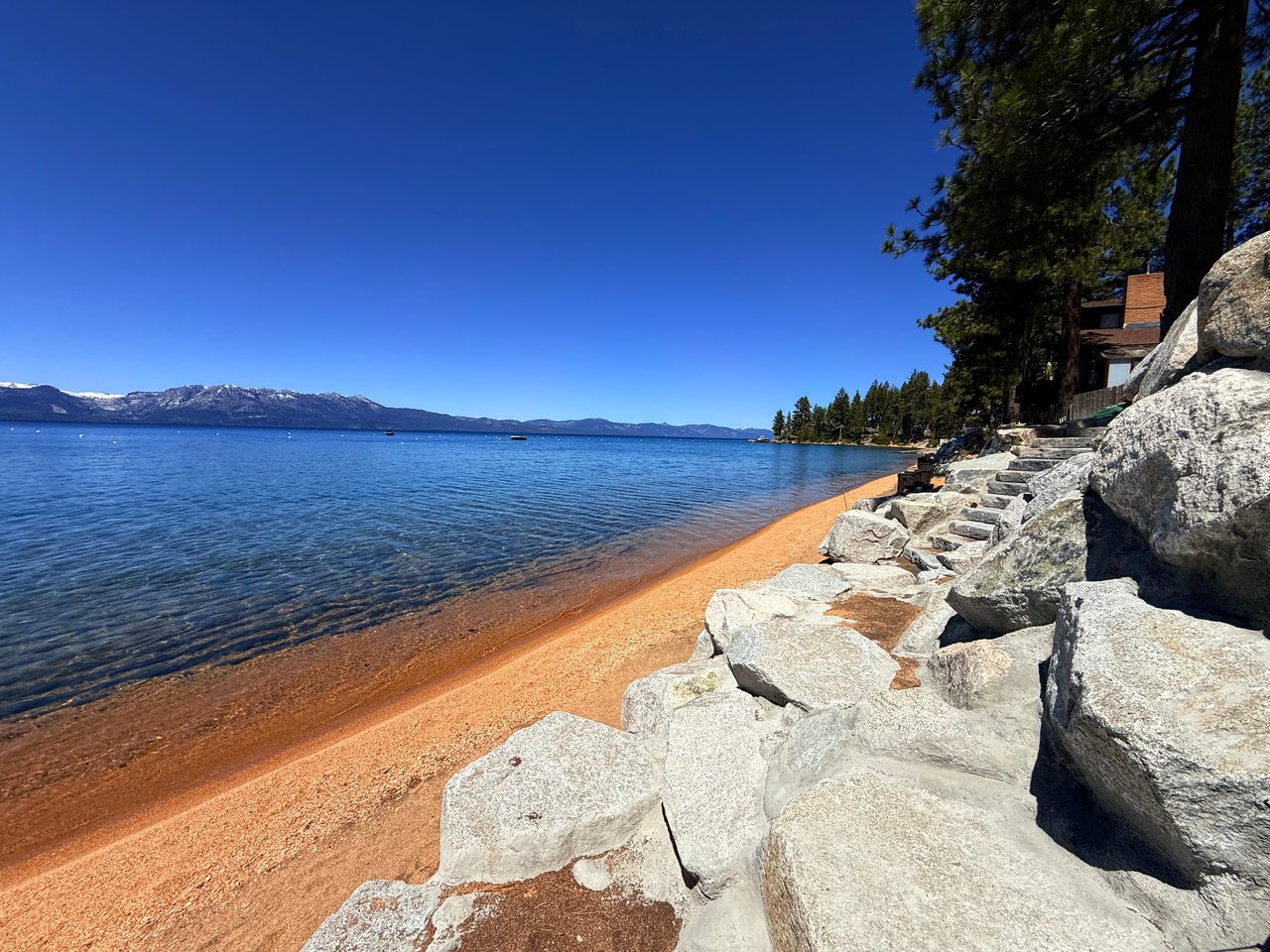
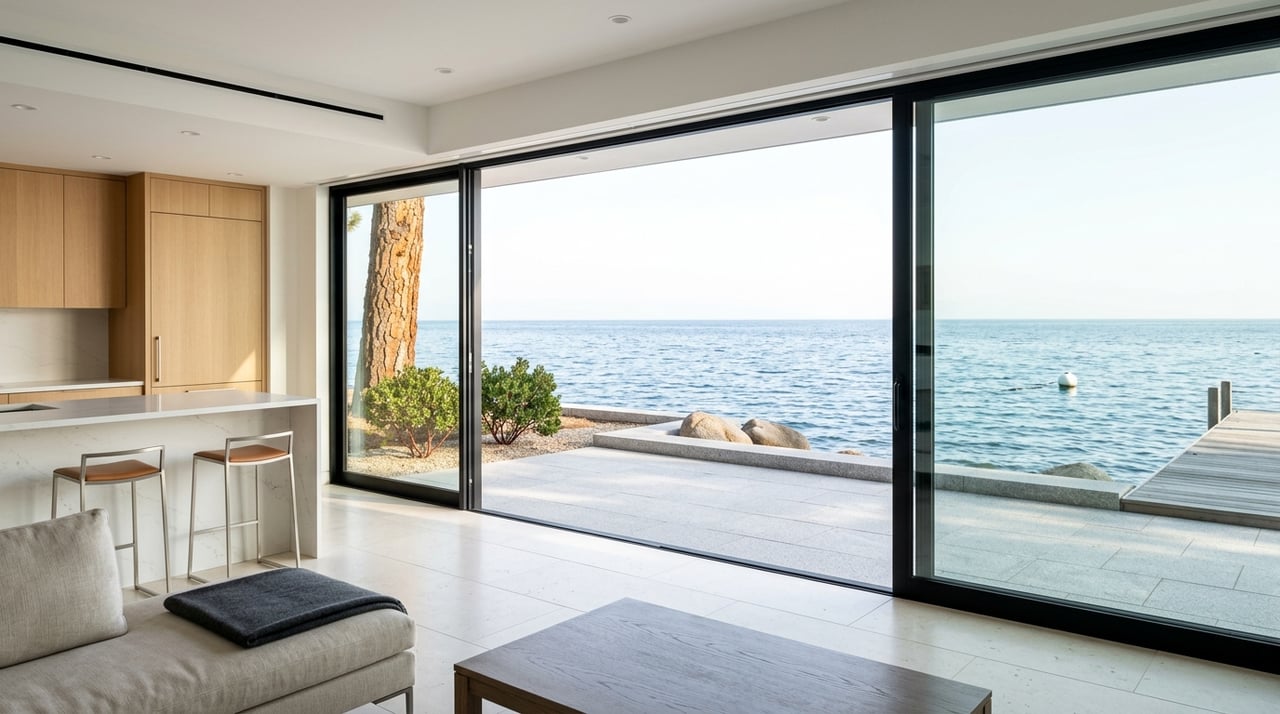
Lakeridge still connects you to the shoreline lifestyle that draws people to Tahoe in the first place. A TRPA scoping document notes that the community has a lakeside pavilion and a state-permitted swim area used by homeowners. Those are important, verified amenities that support the neighborhood’s lake-oriented appeal.
The same TRPA material notes that residents had explored a floating dock or pier extension and buoy access through the shoreline permitting process. That is worth understanding carefully if you are evaluating a specific property. Shoreline features such as piers and moorings are limited and separately permitted, so any parcel-level access or structure should always be confirmed for the individual home you are considering.
Part of Lakeridge’s appeal is that it feels tucked away while staying close to the broader East Shore recreation corridor. The U.S. Forest Service describes this stretch of Lake Tahoe as rich with water activities, camping, hiking, horseback riding, downhill and cross-country skiing, and snowshoeing. That gives you a strong mix of lake time and four-season outdoor options nearby.
Nevada’s scenic-byway information also identifies the Lake Tahoe East Shore National Scenic Byway as a 28-mile stretch along the lake. For homeowners, that means your drives, day trips, and everyday movement through the area remain closely tied to one of Tahoe’s most scenic routes.
If you want easy outings beyond the immediate neighborhood, several East Shore destinations are nearby. Nevada State Parks says Cave Rock offers a small beach, swimming, sunbathing, snorkeling, canoe and kayak launch access, and a boat ramp. Sand Harbor is known for gently sloping beaches, clear water, picnic sites, and boating access.
That balance is part of what makes Lakeridge compelling. You can enjoy a more residential setting at home while still reaching some of the East Shore’s best-known recreation areas for a day on the water.
For many second-home buyers and downsizers, maintenance structure matters almost as much as location. County materials say the Lakeridge GID maintains roads, curb and gutter, sidewalks, storm drains, water systems, and street lighting. That is a strong signal of an established neighborhood with defined infrastructure responsibilities.
It also supports the idea that Lakeridge is more about stewardship than change. In a lake market where some areas feel highly seasonal or tourism-centered, that kind of continuity can be especially appealing.
Lakeridge is not the obvious fit for every Tahoe buyer, and that is part of its value. Based on the neighborhood’s scale, local maintenance structure, and rental restrictions, it is especially well suited to buyers who prioritize privacy, lake proximity, and a settled environment over rental income potential.
That often includes:
If your goal is to own in Tahoe without stepping into a high-traffic vacation-rental environment, Lakeridge deserves a closer look.
Because Lakeridge’s appeal is tied so closely to lifestyle details, it helps to ask targeted questions when touring homes. Not every property will offer the same shoreline relationship, access details, or ownership considerations. A little clarity up front can go a long way.
Here are a few smart questions to ask:
For luxury and second-home buyers, these are not minor details. In a micro-market like Lakeridge, they can shape both daily use and long-term value.
Neighborhoods around Lake Tahoe can look similar on a map but live very differently in practice. Lakeridge is a good example. Its small size, established infrastructure, shoreline amenities, and no-short-term-rental character create a lifestyle that is more specific than a general “lakefront community” label suggests.
That is why neighborhood-level guidance matters. If you are comparing Lakeridge to other East Shore options, the right fit often comes down to the details: how quiet the area feels, how access works, and whether the ownership experience matches the way you actually want to use your home.
If Lakeridge sounds like the kind of Tahoe neighborhood you have been searching for, Craig Zager can help you evaluate available opportunities with the kind of East Shore insight that makes a real difference.


Get In Touch