
September 2026 East Shore Lake Tahoe Real Estate Market Update
September brought the expected shift toward fall on the East Shore, with fewer homes available, a slower pace of new listings, and buyers taking more time to make decisions. Inventory remains relatively healthy compared to earlier this year, but the market is becoming more selective. Homes that are priced appropriately continue to attract interest, while properties that aren't meeting buyer expectations are spending more time on the market.
One of the more notable developments this month is the decline in listing prices per square foot, alongside an increase in the time it takes homes to go under contract. For sellers, pricing and presentation are becoming increasingly important. For buyers, the combination of more negotiating room and a good selection of available properties presents opportunities heading into the final months of the year.
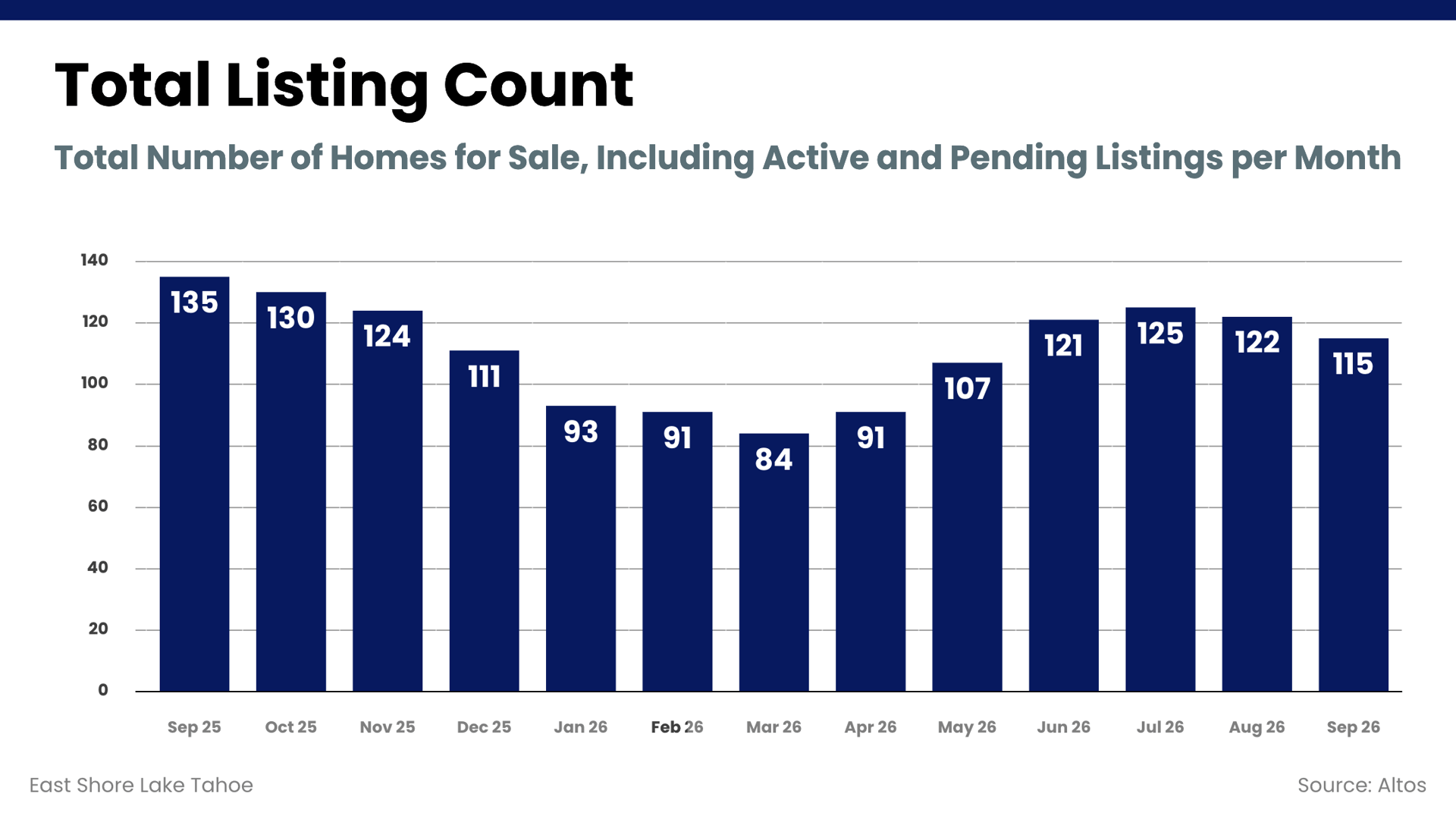 Total Listing Count: 115 homes (↓ from 122 in Aug)
Total inventory declined for the second consecutive month after reaching its seasonal high of 125 homes in July. This follows the typical pattern we see as summer comes to an end and fewer properties enter the market.
Even with the decline, inventory remains well above the spring low of 84 homes in March. Buyers still have a good selection of properties to consider, although that selection is beginning to narrow as we move further into fall.
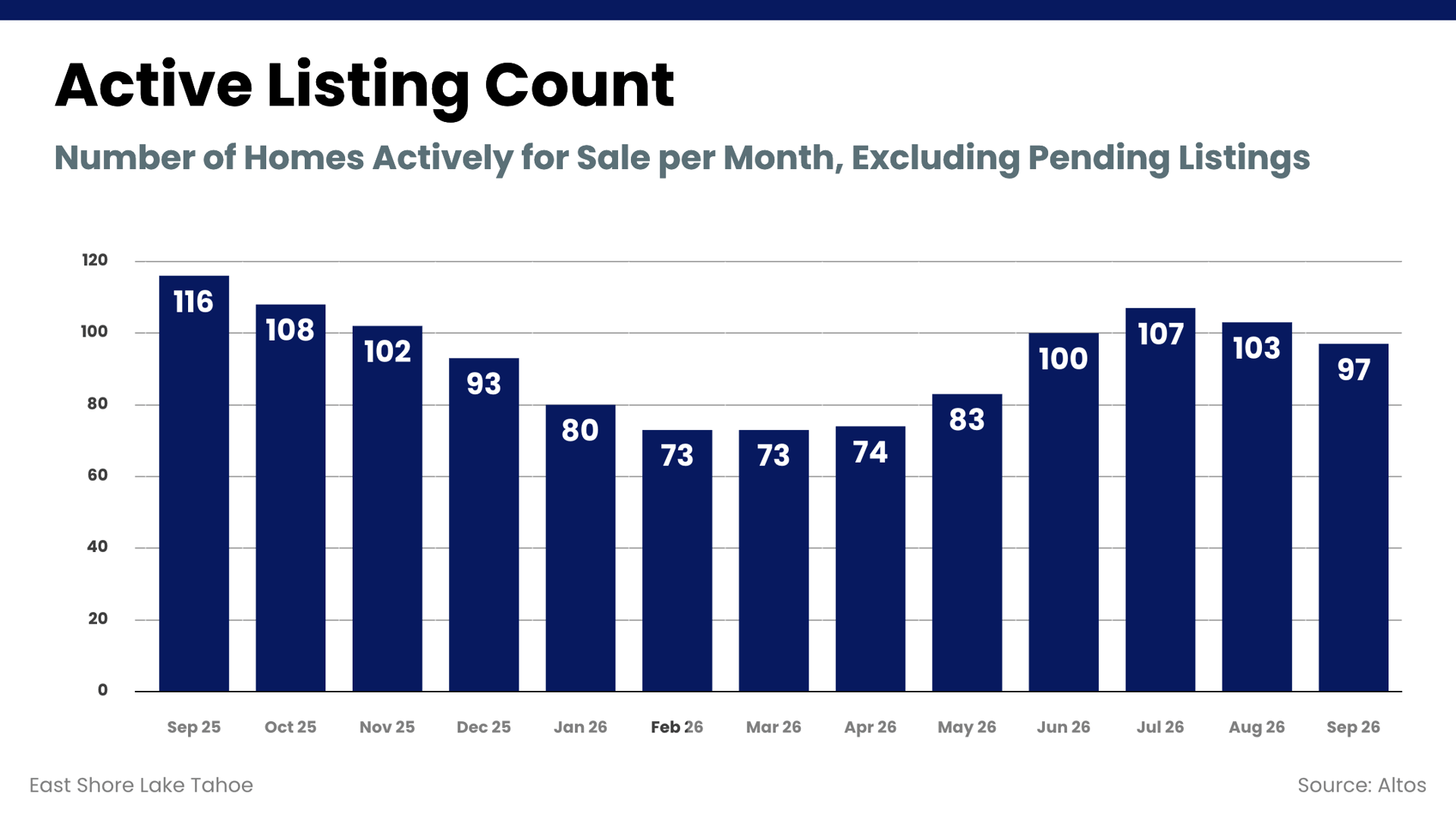 Active Listing Count: 97 homes (↓ from 103 in Aug)
Active inventory dropped by six homes in September, bringing the number of properties available for purchase below 100 for the first time since May.
The decline is consistent with the slowdown in new listings rather than a significant increase in buyer activity. For sellers, there is slightly less competition than during the summer months, but with 97 active properties, buyers still have options and are taking the time to compare them.
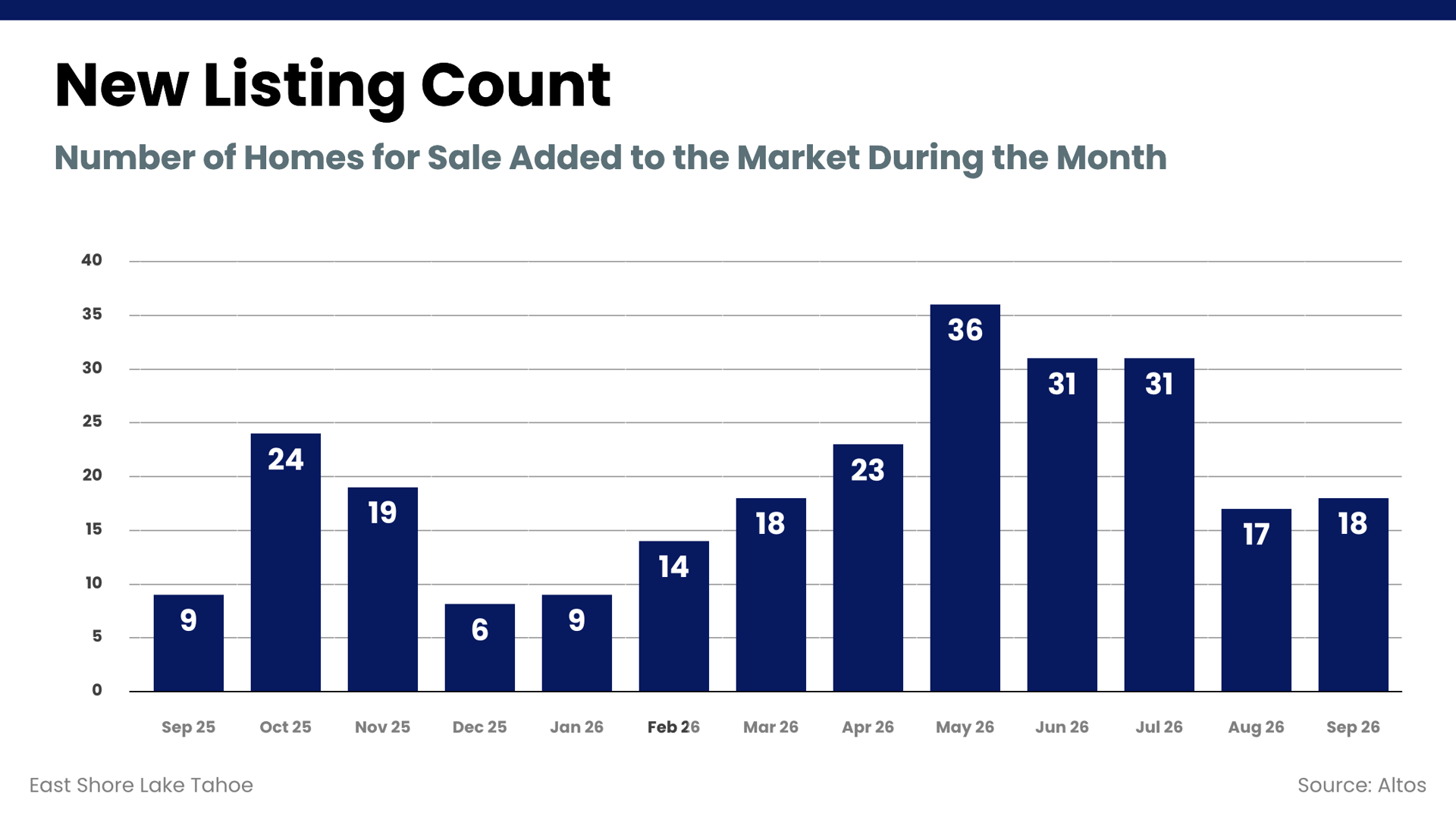 New Listing Count: 18 homes (↑ from 17 in Aug)
New listings remained relatively quiet in September, with just one more property coming to market than in August. This is a substantial change from May, June, and July, when new listings averaged more than 30 homes per month.
The seasonal slowdown in new inventory is now well established. With fewer new properties entering the market, buyers are increasingly choosing from existing listings, making it important for sellers whose homes have been on the market for several months to reassess their pricing and presentation.
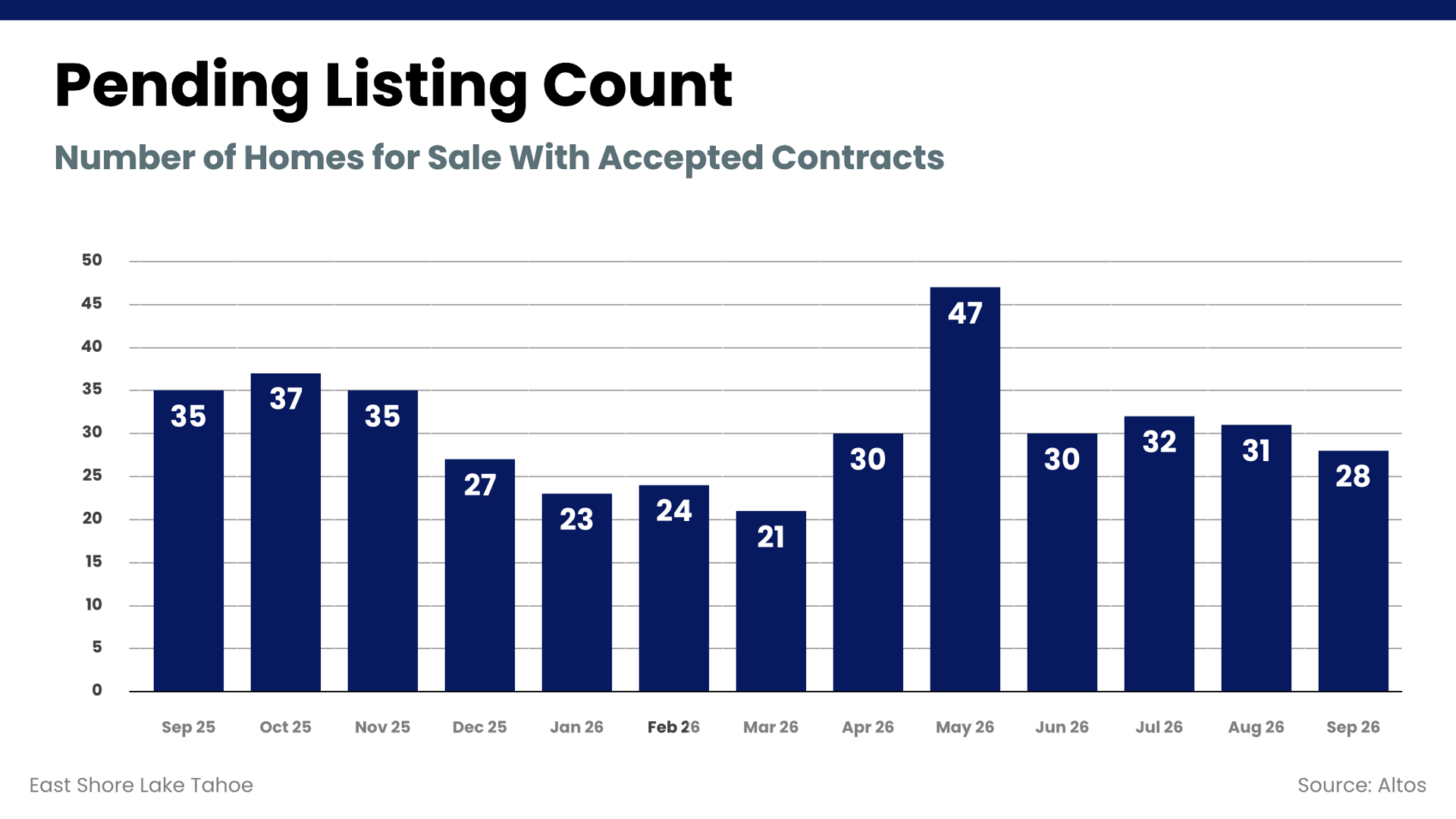 Pending Listing Count: 28 homes (↓ from 31 in Aug)
Pending listings declined slightly in September, continuing the relatively steady pace we've seen since June. Although contract activity is well below May's peak of 47 pending homes, it remains higher than the levels recorded during much of the winter and early spring.
Buyers are still making purchases, but they're approaching decisions more carefully. The combination of steady contract activity and longer marketing times reinforces the importance of realistic pricing, particularly for homes competing with similar properties.
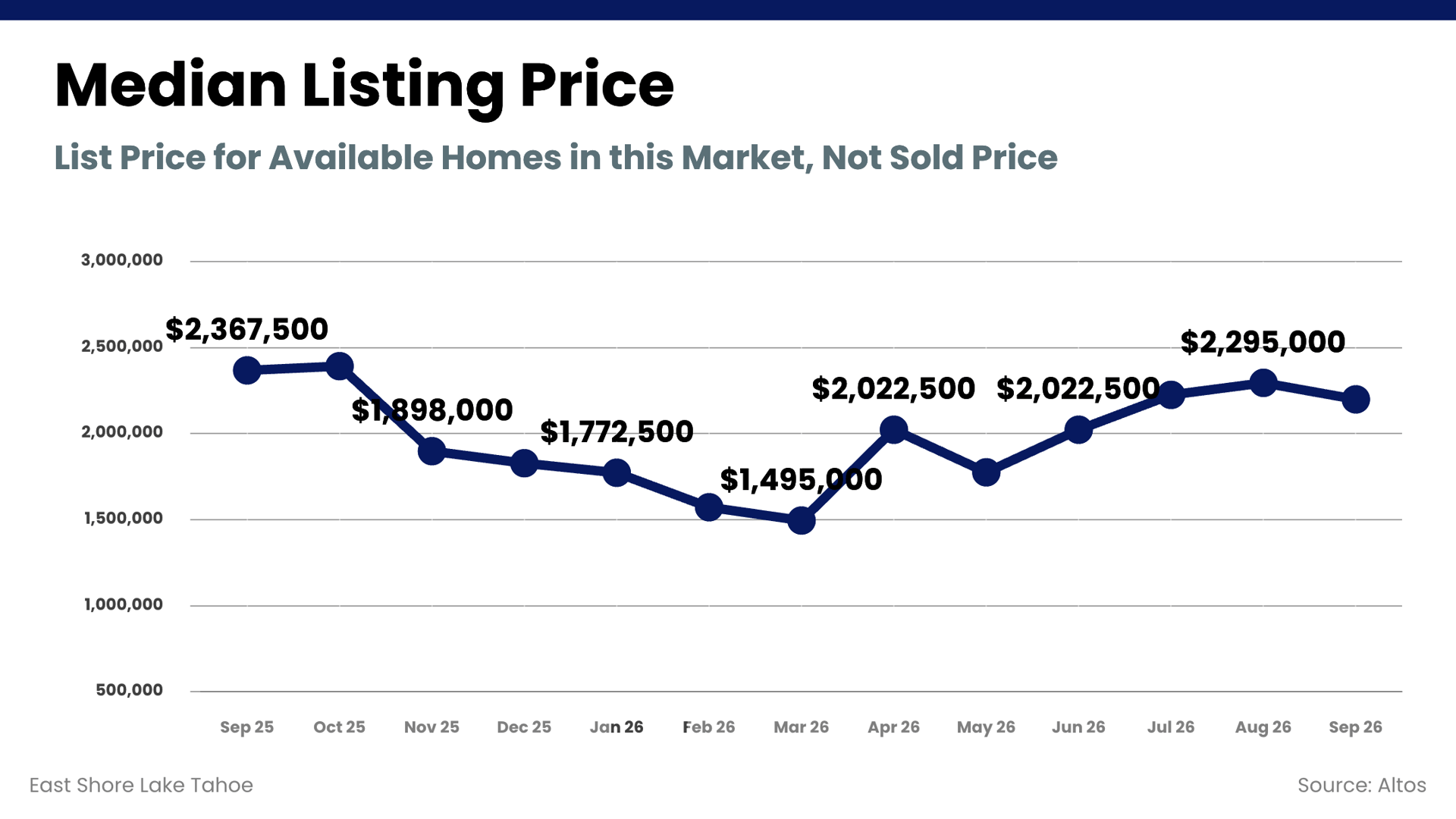 Median Listing Price: Approximately $2.2 Million (↓ from $2,295,000 in Aug)
The median asking price moved lower in September after reaching $2,295,000 in August. Despite the decline, the median remains substantially higher than the March low of $1,495,000.
It's important to distinguish between asking prices and actual sale prices. The median listing price reflects the homes currently available, and changes in the mix of properties can have a considerable impact on this number. September's decline is worth watching alongside the reduction in price per square foot, but it doesn't necessarily mean individual home values have fallen by the same amount.
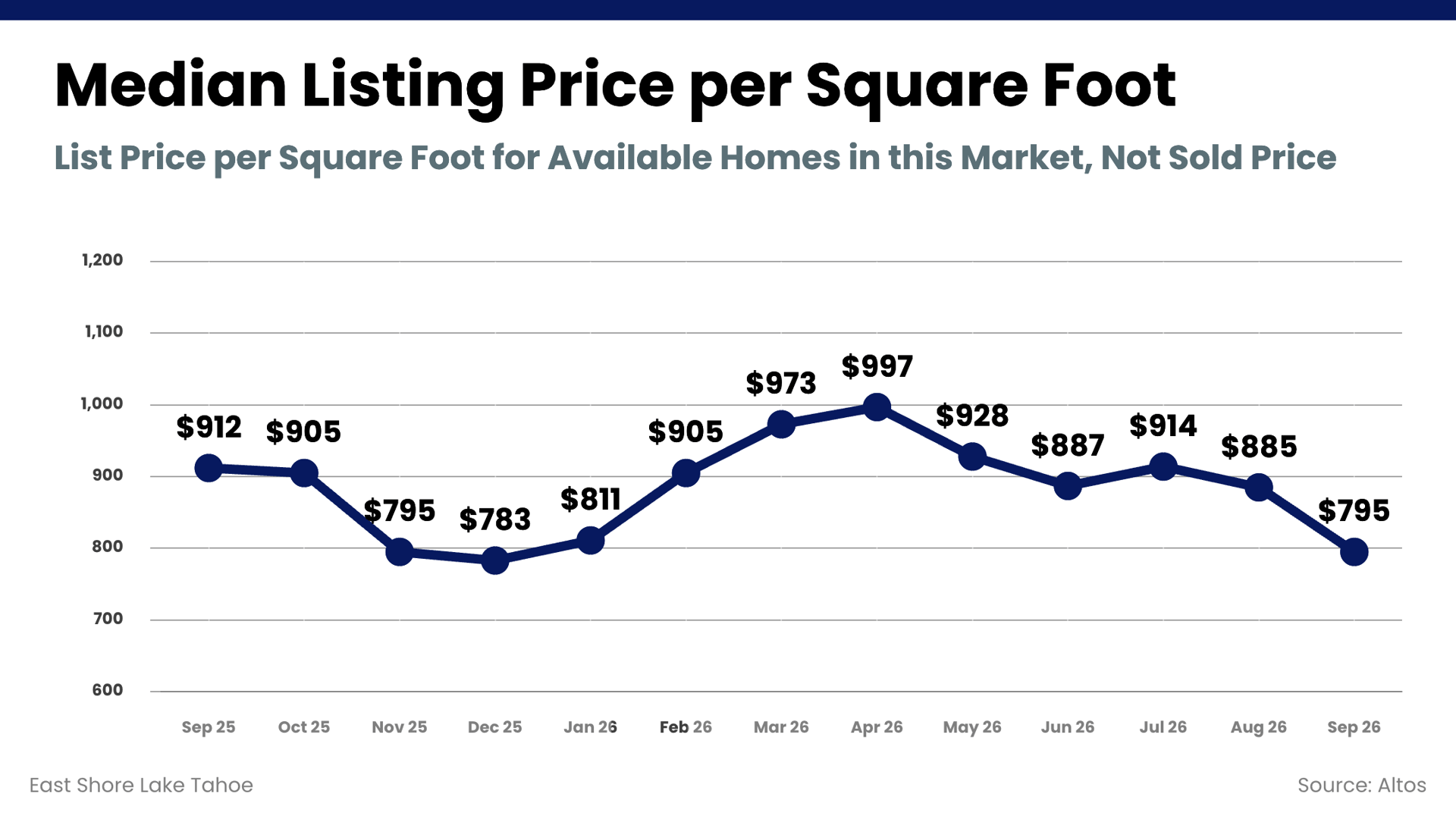 Median Listing Price per Square Foot: $795 (↓ from $885 in Aug)
The median asking price per square foot fell to $795 in September, a decrease of approximately 10% from August and the lowest reading since December 2025.
This is one of the more significant changes in September's numbers. After reaching $997 per square foot in April, asking prices per square foot have generally trended lower. The current selection of homes is now priced considerably below the levels we saw during the spring.
For buyers, this creates an opportunity to evaluate properties that offer better value than earlier in the year. For sellers, it reinforces the need to look closely at current competition rather than relying on asking prices from several months ago.
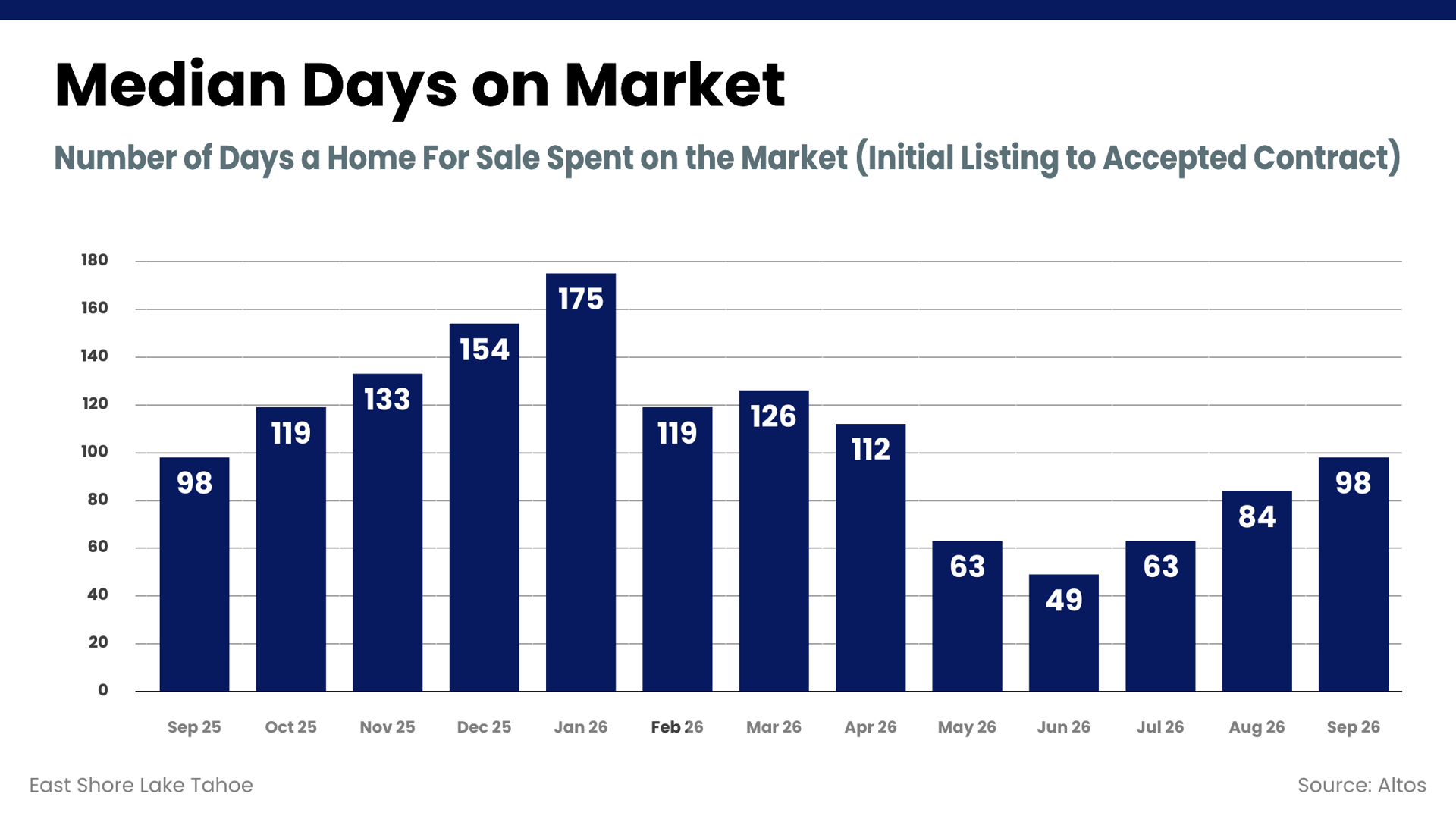 Median Days on Market: 98 days (↑ from 84 in Aug)
Marketing times increased for the third consecutive month, rising from a low of 49 days in June to 98 days in September. Homes are now taking roughly twice as long to reach an accepted contract as they were at the beginning of summer.
This is an important consideration for sellers heading into fall. Buyers have become more deliberate, and properties that aren't priced competitively are taking longer to sell. A longer marketing period doesn't necessarily indicate a lack of demand, but it does mean sellers need to be prepared for a more patient sales process.
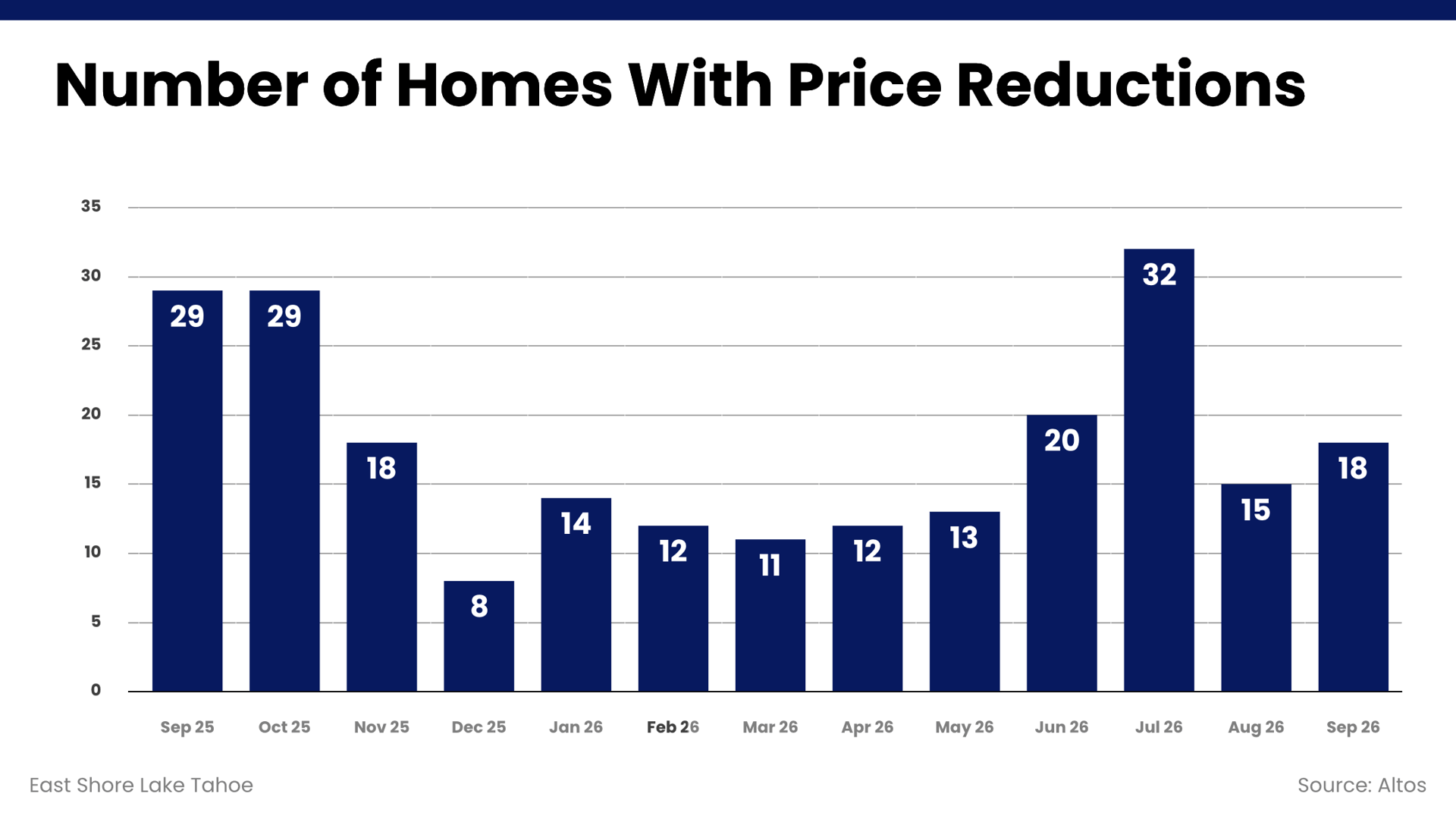 Number of Homes With Price Reductions: 18 homes (↑ from 15 in Aug)
Price reductions increased modestly in September, although they remain well below July's peak of 32 homes.
With marketing times increasing and buyers having a reasonable selection of properties, sellers are continuing to make adjustments to attract attention. The increase in reductions is another indication that buyers are responding to value rather than simply accepting initial asking prices.
For sellers considering a price adjustment, the goal should be to position the property competitively against what's currently available, not just to make a small reduction and hope for a different result.
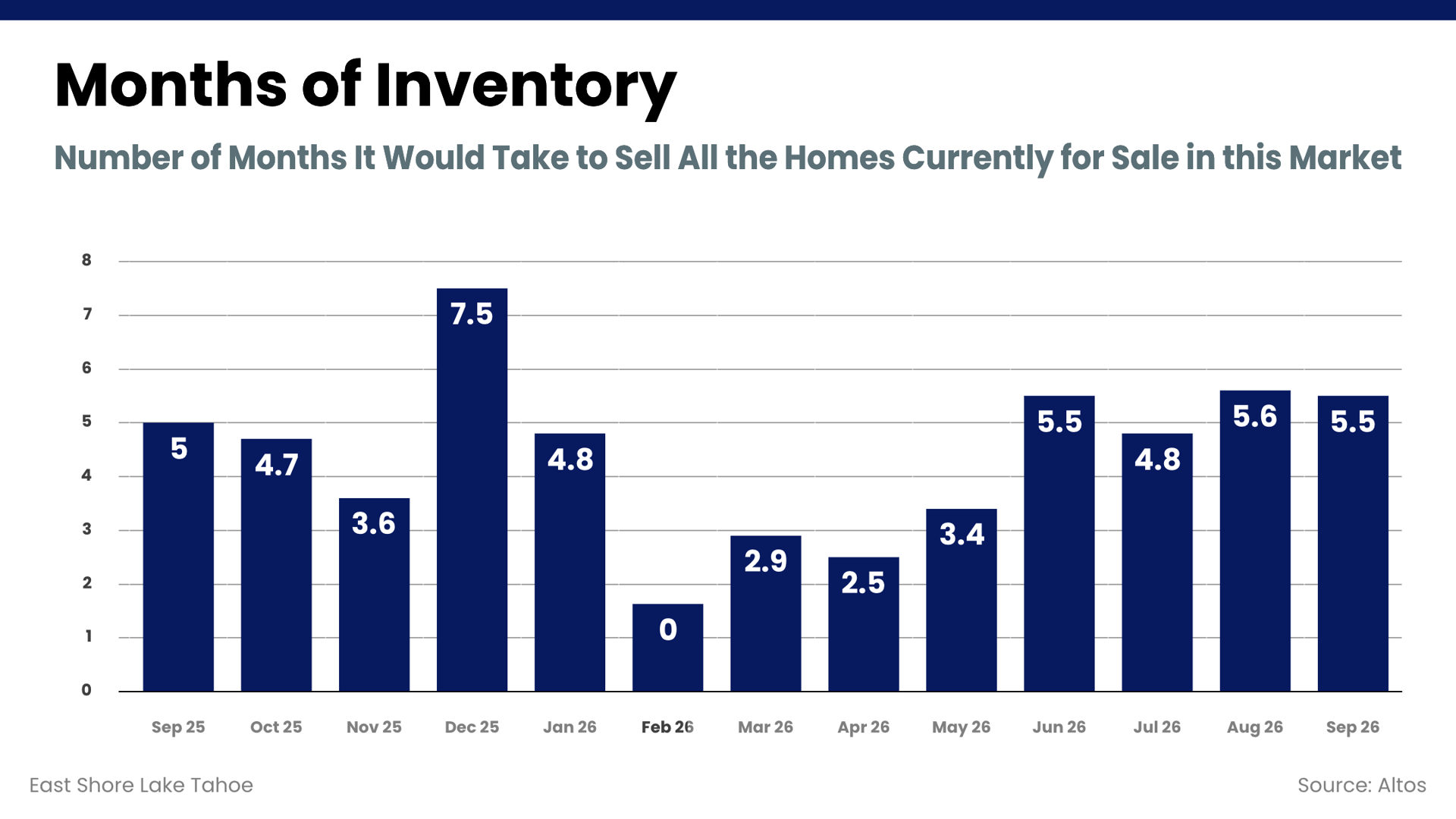 Months of Inventory: 5.5 months (↓ from 5.6 in Aug)
Months of inventory remained virtually unchanged in September, holding near five and a half months for the third time in the past four months.
This level of supply points to a relatively balanced market, where neither buyers nor sellers have a decisive advantage across the board. The important distinction is that conditions vary considerably by property type, location, price range, and condition.
Well-positioned properties continue to find buyers, while homes that are overpriced or require substantial improvements face more competition. For buyers, the current inventory provides room to negotiate without the urgency that characterized tighter markets.
September's numbers show a market transitioning into its slower fall season, but the bigger story is the changing relationship between inventory, pricing, and buyer activity.
Although the number of available homes has declined since July, buyers still have considerably more to choose from than they did earlier this year. At the same time, longer marketing periods, additional price reductions, and lower asking prices per square foot show that buyers are becoming more selective about what they're willing to pay.
For sellers, the takeaway is straightforward: pricing accurately from the beginning is increasingly important. Properties that are well presented and competitively priced are in a stronger position to attract serious buyers, while those priced above current market expectations face longer marketing periods.
For buyers, fall presents a good opportunity to explore the market. Inventory is still relatively strong, and sellers with homes that have been listed for several months are often more receptive to reasonable offers.
As we move into the final quarter of 2026, we'll continue watching how inventory, pending sales, and pricing adjustments develop. These numbers provide a useful picture of the overall East Shore market, but the details of each property ultimately determine its value and how quickly it sells.








Get In Touch